


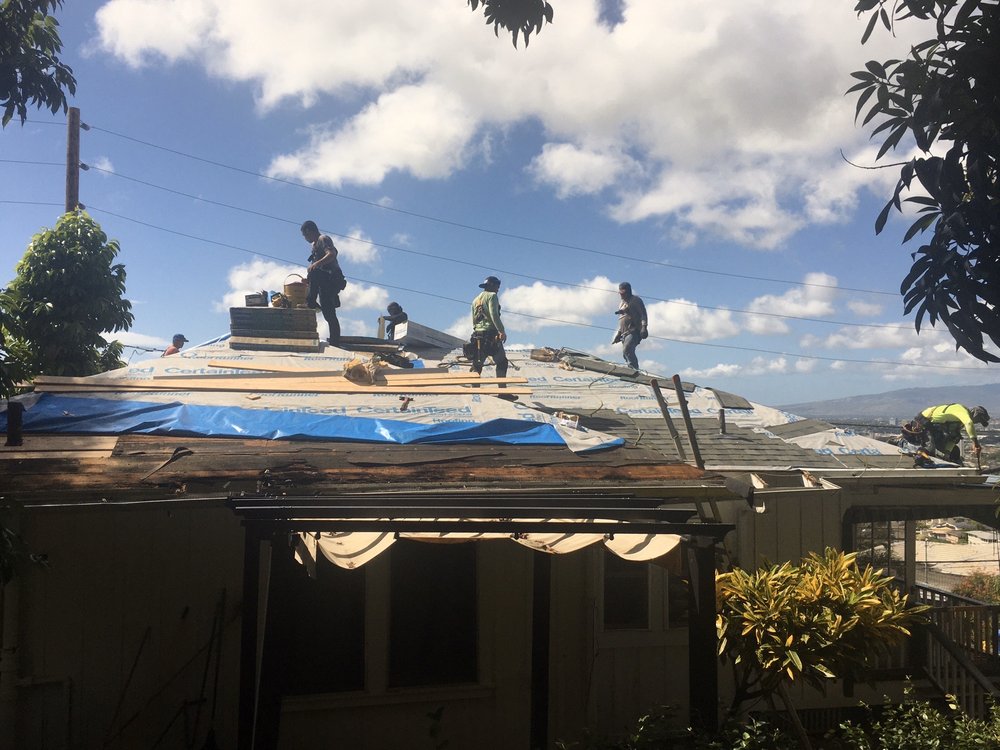
Most residential roof replacements take one to three days of active crew work for asphalt shingles, with longer timelines for metal or tile. But that number only covers time on the roof. The full process from first call through final walkthrough typically runs three to six weeks on the islands. Permitting, material shipping, and weather windows add time that mainland estimates rarely account for.
If you’ve already spotted warning signs that a repair won’t cut it, understanding the real timeline of a roof replacement helps you plan around contractor schedules, material lead times, and hurricane season.
At a Glance
- Asphalt shingle roofs: 1–3 days of active installation
- Metal roofs: 2–5 days
- Tile roofs: 3–7 days
- Full process (first call to final walkthrough): 3–6 weeks
- Key delay factors: roof complexity, county permits, material shipping, and weather
- Hurricane season runs from June 1 to November 30, with peak activity from July through September
Average Roof Replacement Time by Material
The number of days it takes to replace a roof depends on the roofing material used. Each roofing product has its own installation method, fastening requirements, and prep work. Here’s what to expect for an average Hawaii home of roughly 1,500 to 2,500 square feet:
- Asphalt shingles: 1–3 days. The fastest to install. Most shingle roofs wrap up in one to three working days, including tear-off and cleanup.
- Metal roofing: 2–5 days. Each panel requires precise alignment and secure fastening to meet Hawaii’s wind-load standards.
- Concrete or clay tile: 3–7 days. The most labor-intensive option. Tile requires batten systems and individual placement, which can extend the timeline further on complex roof layouts.
- Cedar shake: 3–5 days. Timeline varies with the shake profile and roof complexity.
These ranges assume a full tear-off of the old roof, which is standard practice in Hawaii for good reason. Layering new material over old might save a day up front, but it traps moisture against the deck. In tropical heat and humidity, that moisture turns into rot and mold faster than most homeowners expect.
What Affects Your Roof Replacement Duration
How long does roofing take on your specific home? The estimates above are a solid starting point, but your actual timeline depends on a handful of factors. Some apply to every roof job. Others are unique to living on the islands.
Roof Size, Pitch, and Layout
The simpler your roof, the faster the job. A single-story home with a basic A-frame (gable) roofline is quicker work than a two-story home with steep slopes and multiple angled sections.
Many Hawaii homes feature hip roofs, where all four sides slope downward, because they hold up better in high winds. That design is great for storm protection, but each additional ridge and angle means more labor on installation day.
Skylights, chimneys, and vents add time too, since each one needs careful sealing to keep water out.
Roofing Material
Your choice of material affects more than just cost. Metal panels built for Hawaii’s wind codes need precise fastener placement, which takes longer than nailing shingles. Tile roofs are heavy, and some older homes need structural reinforcement before the new tile can go on.
If you’re still weighing options, comparing how each material performs in Hawaii’s climate can help narrow the decision and give you a better sense of the timeline involved.
Permits and Inspections
Hawaii handles building permits at the county level, and processing times vary across Kauai, Maui, and Oahu. A standard re-roof permit may clear in a few days. Projects that involve structural work, like reinforcing the deck for a heavier material, often need engineering review and take longer.
Your contractor typically handles the paperwork, but asking about expected turnaround before you sign helps you avoid surprises with the wait.
Material Shipping and Island Logistics
Nothing shows up by truck in Hawaii. Every roofing product arrives by container ship. Common materials like asphalt shingles and standard metal panels are usually in stock with local distributors. But if your project calls for a specific tile profile, a custom metal color, or a less common underlayment, expect weeks of lead time from the mainland.
Inter-island freight can add another step when materials need to move between ports. Asking your contractor about stock early on is one of the easiest ways to avoid a schedule delay.
Weather and Scheduling Windows
Rain stops roofing work. Crews can’t lay down the protective layer beneath your shingles or seal the metal strips around edges and vents if the deck is wet. Strong winds shut things down, too. If your home is on windward Kauai or Oahu’s North Shore, trade wind showers are more frequent, which means more potential delay days.
Scheduling during drier stretches (April through early June, September through October) can help, though island weather doesn’t always cooperate with the calendar.
Your Full Roof Replacement Timeline
How long does a roof replacement take from the first phone call to the final inspection? Here’s a realistic sequence for a typical Hawaii project:
- Inspection (Week 1–2): The contractor evaluates your existing roof, identifies damage, and recommends materials based on your home’s structure and exposure.
- Estimate and contract (Week 2–3): You review the estimate, compare material options, and sign a contract. For a closer look at what goes into pricing, this breakdown of Hawaii roofing costs covers the factors that shape your quote.
- Permitting (Days to several weeks): Turnaround depends on your county and the scope of work. Projects with structural changes will take longer than a straightforward re-roof.
- Material ordering (Days to 2–4 weeks): Standard products stocked locally add minimal wait time. Specialty orders from the mainland can extend this phase by several weeks.
- Installation (1–7 days): The crew strips the old roof, inspects the deck for hidden damage, makes any needed repairs, applies underlayment and flashing, and installs the new material.
- Cleanup and walkthrough (Same day or next morning): Final debris removal, a magnetic nail sweep, and a walkthrough with the homeowner to confirm the finished work.
Why Timing Matters During Hurricane Season
Hawaii’s Central Pacific hurricane season runs June 1 through November 30, with peak activity between July and September. NOAA’s 2026 outlook forecasts above-normal activity, with five to thirteen tropical cyclones possible. That range is well above the historical average of four to five.
That forecast affects roof replacement scheduling in two practical ways.
Limited Contractor Availability
More homeowners move to address roof issues before storms arrive, which drives longer wait times for inspections and installations.
More Weather Disruptions
Active tropical systems bring additional rain days and work stoppages. Emergency tarping and storm-damage repairs also take priority over planned replacements once a system threatens the islands.
If your roof already has problems that could worsen in heavy weather, scheduling before mid-July offers the best chance of completing a replacement before peak season. Waiting until August or September means competing with higher demand, tighter schedules, and less predictable weather. A pre-season roof checklist can help you assess where your roof stands right now.
How to Prepare for Your Roof Replacement
A few practical steps make the installation go more smoothly.
Day-of Logistics
Most homeowners stay in their homes while the work is being done. Expect noise starting early; crews typically begin at first light to maximize daylight hours. Move vehicles out of the driveway and clear space around the house for materials, equipment, and debris.
Inside the House
Take down wall hangings and loose shelf items near exterior walls. Vibrations from tear-off can shake things loose, especially in older homes. Cover anything stored in the attic with drop cloths in case dust comes through during the deck inspection.
Outside
Trim back branches that overhang the roof and move patio furniture, potted plants, and anything fragile away from the perimeter. Your contractor handles debris containment and a magnetic nail sweep after the job, but a clear staging area can help the crew work faster.
Neighbors
Let them know ahead of time. Roof replacements are loud, and a heads-up goes a long way, particularly in neighborhoods where homes sit close together.
Schedule a Free Roof Inspection on Kauai, Maui, or Oahu
ProBuilt Hawaii is a locally owned, licensed roofing contractor (CT-36274) with over 40 years of industry experience serving Kauai, Maui, and Oahu. As a CertainTeed SELECT ShingleMaster, we back qualifying shingle installations with extended warranty coverage most contractors can’t match. Our crews manage every phase of the replacement process, from tear-off through final inspection, across all three islands.
Call 808-808-ROOF or request your free estimate to get a clear timeline for your roofing project.