


Ask most homeowners what’s protecting their house from the rain, and they’ll probably say the shingles. Fair enough. But there’s a whole layer underneath doing a big share of the work, and most people never think about it until there’s a stain spreading across their ceiling.
That’s roof underlayment, and it’s worth knowing about, especially now. Hawaii’s wet season really gets going around October, and December and January are usually the soggiest. It’s better to know your roof’s ready before the rain shows up than to find out during it.
Roof Underlayment: The Quick Facts
- What it is: A water-resistant layer under your shingles, tiles, or metal that catches any rain sneaking past the top
- Why it matters here: Salt air, sun, and blowing rain wear island roofs down fast, and this layer is your last stop before a leak
- The three types: Felt (cheap, old-school), synthetic (lighter and tougher), and peel-and-stick (fully waterproof, priciest)
- Best bet for Hawaii: Synthetic or peel-and-stick, since they take heat, rain, and salt better than felt
- What it runs: Materials go from a few cents to under a dollar a square foot, but labor and deck repairs usually add up to more
- Watch for: Signs it’s failing, like ceiling stains, leaks after a storm, a musty attic, or an old roof that’s overdue for a look
What It Actually Does
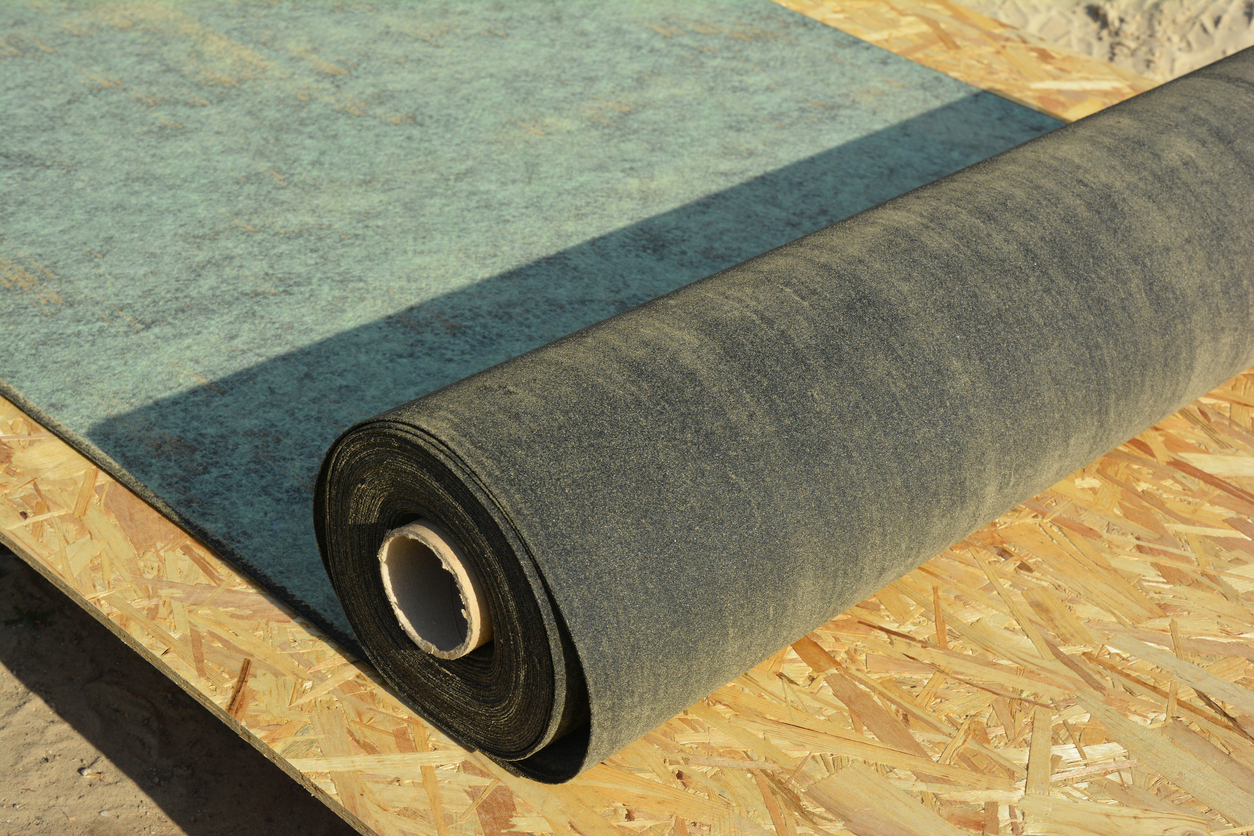
Roof underlayment is a water-resistant sheet that goes right on top of your roof deck, under the shingles, tiles, or metal. You can think of it as your roof’s backup layer. The shingles up top take the sun, rain, and wind. But when a shingle lifts in a storm, or rain blows in sideways and sneaks underneath, the underlayment catches it. It keeps that water off the wood and out of your living room. Without it, every little gap up top turns into a leak.
Is Roof Underlayment Optional?
Short answer: no. It’s not an upgrade or an add-on you can skip to save a few bucks. Building codes require underlayment under just about every roof. A licensed job won’t pass inspection without it. Most shingle warranties count on it, too, which means leaving it out can void the coverage on the shingles you just paid for.
What you actually get to choose is the type, and which spots get the heavier-duty stuff, not whether you have it at all.
Why It Matters Even More in Hawaii
Roofs in Hawaii take a beating that most mainland roofs just don’t. Salt air, strong sun, wind-driven rain, the odd Kona storm rolling through: it all works on your roof year-round.
Your underlayment is the thing standing between a lifted shingle and a wet ceiling. It can contribute to a lot of the roofing problems we run into around the islands, too, where one small gap quietly turns into a big repair bill. A solid underlayment gives you room to breathe when the weather turns.
Roofing Underlayment Types
There are basically three kinds you’ll run into. Here’s the quick version on each.
Asphalt-Saturated Felt
Roofing felt is the old-school option, paper or fiberglass soaked in asphalt. If you’ve got an older home here, chances are it’s the felt paper roofing sitting under your shingles right now. It’s cheap, and it’s been around forever, but it’s heavy, it tears easily, and it wrinkles once it gets wet.
Synthetic Underlayment
Synthetic underlayment is the newer stuff, woven from plastic-type fibers. It’s lighter, a lot tougher, and it sheds water better than felt. It also handles sun exposure longer, which matters under Hawaii’s sun, the most intense UV in the country.
Rubberized Asphalt (Peel-and-Stick)
This one’s a sticky, fully waterproof membrane that bonds right to the deck. Roofers reach for it in the spots most likely to leak, like valleys, eaves, and anywhere the roof runs low and flat. It’s the toughest option, and yeah, the priciest.
So, synthetic underlayment vs felt? Synthetic’s tougher and better with water. Felt’s easier on the wallet up front. For most Hawaii roofs, that extra strength is worth it.
Matching It to Your Roof
The right underlayment for your house depends a lot on what’s going over the top. Different roofs ask for different things underneath.
Metal Roofs
Metal roof underlayment has to take a lot of heat because metal soaks up the sun and holds onto it. So you want a high-temp synthetic or a peel-and-stick that won’t cook and break down against a hot panel.
Tile Roofs
With tile, the underlayment does even more of the heavy lifting, since water can work its way under the tiles. That’s why tile roof underlayment is usually a heavier or stick-down product, one that’ll last as long as the tile on top.
Asphalt Shingles
Shingle roofs go with felt or synthetic. These days, most solid installs use synthetic due to its strength and water resistance.
Not sure what roof material even makes sense for where you live? Our rundown on picking the best roofing material for Hawaii’s climate is a good starting point.
The Best Underlayment for Hawaii Homes
Here’s the honest answer for island living: the best roof underlayment is one built for island conditions. That means it can take wind-driven rain, real heat, and salt air all at once. That’s usually synthetic or peel-and-stick, which is why they end up on most of the roofs we put down. Your material, your roof’s slope, and your budget all play in, so ask us, and we’ll tell you straight what fits your place.
How It Gets Installed
Underlayment installation looks straightforward from the ground, but the little stuff is what makes it hold. A good crew works through a few key steps:
- Tear-off: Strip the old underlayment and roofing down to a clean deck
- Deck check: Look over the plywood for soft or rotted spots and swap out any bad boards
- Lay-down: Roll the new underlayment out with the right overlap at every seam
- Flashing: Seal around vents, valleys, and edges, the spots where leaks usually start
Miss the overlap on a seam or leave one bad board, and water will find it. It’s not flashy work, but it’s the part that keeps you dry, and it’s where doing it right really shows.
What It’ll Run You
Roof underlayment cost comes down to the material, plus the size and shape of your roof. Here’s the rough breakdown for materials:
- Felt: About 5 to 50 cents a square foot
- Synthetic: Around 15 to 70 cents a square foot
- Peel-and-stick: More than either, since it’s the heavy-duty option
Keep in mind those are just material numbers. Labor, tearing off the old layer, and any deck repairs usually add up to more than the cost of the underlayment itself. Prices here also sit above mainland numbers once you factor in shipping and island labor.
For a real figure on your own roof, give us a shout and we’ll get you an estimate.
Signs Your Roof Underlayment May Be Failing
You can’t see your underlayment, but when it’s failing, it leaves signs. Keep an eye out for these, especially right after a big storm:
- Stains on the ceiling or walls: Brown rings or damp spots mean water’s already getting past your roof
- Leaks when it rains: If it’s dripping inside, something above the deck has let go
- Musty smell or mold: That usually means moisture’s stuck in the attic and the barrier isn’t doing its job
- Daylight in the attic: If you can see light through the roof boards, water can get through the same gaps
- An old roof: The underlayment ages right along with everything else, so an old roof usually has old, tired underlayment
If any of this sounds familiar, the fix might go deeper than the underlayment. Check out our guide on when a repair won’t cut it to figure out whether you’re looking at a patch or a whole new roof.
Get Your Roof Ready Before Hawaii’s Wet Season With ProBuilt
The best time to deal with your underlayment is before the rain puts it to the test. If your roof’s getting up there in years, leaking, or just due for a look, getting it checked now sure beats mopping up a leak in January.
ProBuilt Hawaii takes care of roofs on Kauai, Maui, and Oahu the same way, with professionalism and Aloha, whether you need a roof inspection, replacement, or new construction. Give us a call at 808-808-ROOF or request an estimate, and we’ll make sure that layer you never think about is set for the season ahead.