


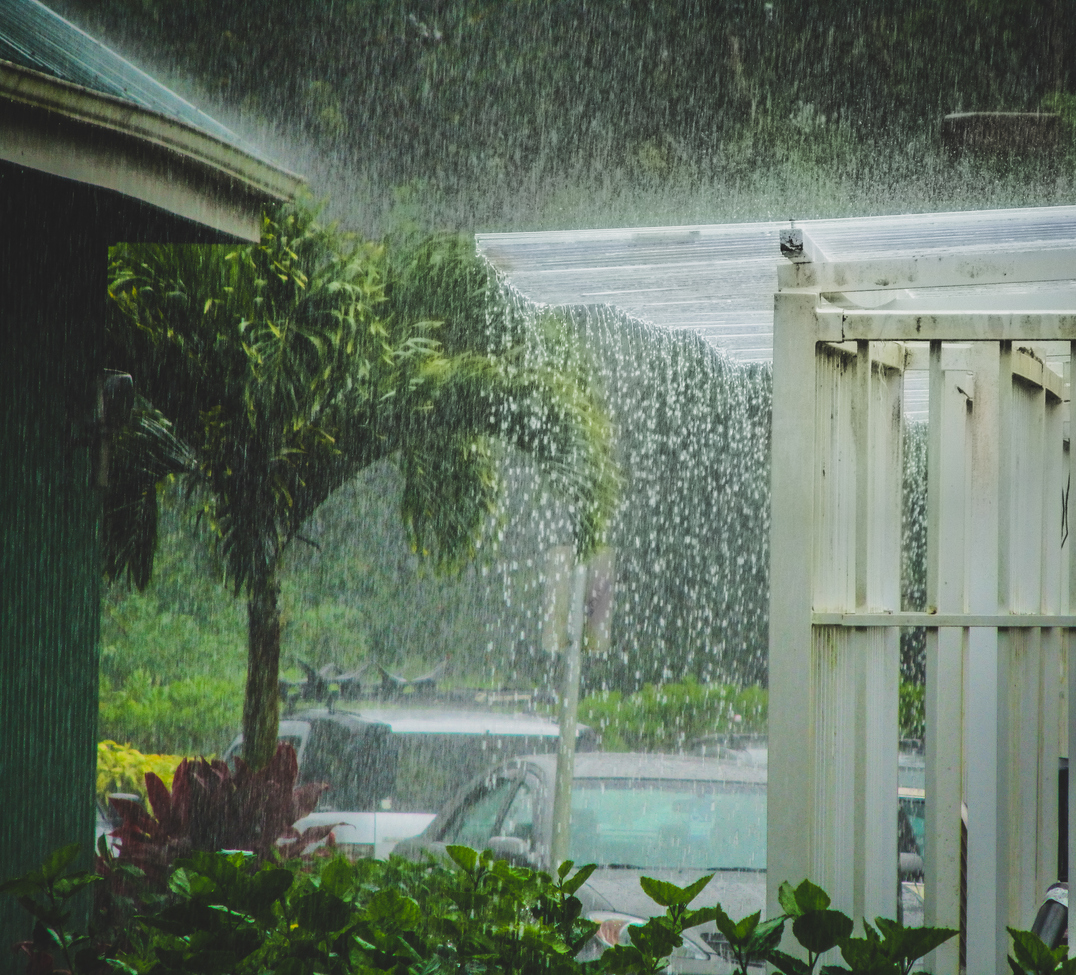
October through April, aka Hawaii’s rainy season, brings stretches of heavy downpours that test your roof, gutters, and drainage. Kona lows, those winter low-pressure systems that pull deep moisture over the islands and push wind-driven rain from unusual directions, can make small weak spots in your roof or gutters show up fast.
For any Hawaii homeowner, whether you’re on Oahu, Maui, or Kauai, a quick check after the weather clears helps you find roof leaks, gutter clogs, and drainage issues early, before they turn into mold or costly water damage.
Safety First
Don’t let wet surfaces and ladders turn a simple check into an injury:
- Stay off the roof when it is wet, steep, or windy.
- Keep clear of sagging ceilings, bubbling drywall, or leaks near lights and outlets.
- Only enter your attic if it’s dry, stable, and well-lit. Step only on solid wood framing that you can clearly see. Never step on drywall.
- If water is near electrical panels or fixtures, call a professional.
After Heavy Rain, Use This Fast Walkthrough
Here’s how to check for roof leaks and gutter issues early so you can fix any minor problems before they turn into costly repairs.
Step 1: Check Inside for Roof Leaks
Interior clues are often the first sign that water got in. Finding indoor leaks early can prevent ceiling damage and help you figure out whether it’s time to schedule a roof replacement to avoid further leaks and water damage.
What to Look For:
- Ceiling stains that were not there before
- Paint that bubbles, peels, or looks puffy
- Drywall that feels soft or looks swollen
- A musty smell, especially in closets and bedrooms
- Drips around ceiling vents, fans, recessed lights, or skylights
Tip: Take photos right away. If the stain grows after the next storm, that helps confirm an active leak.
Step 2: If You Have an Attic, Do a Simple Moisture Check
Some leaks don’t show up as a ceiling stain at first. Water can drip onto the insulation in the attic, which acts like a sponge, holding moisture for a while before the ceiling below starts to discolor or sag.
What to Look For:
- Damp or matted insulation
- Dark water tracks on wood
- Wet areas around vents or pipes
- Rust that looks new on nails or fasteners
- A musty smell that was not there before
If you see widespread dampness, multiple drip points, or wet wood, that’s often beyond a simple spot fix and may call for a major roof repair or planning for roof replacement.
Step 3: Do a Ground Level Roof Check
You can learn a lot about your roof without having to climb it!
During a Kona low, rain can be pushed sideways and upward under edges and gaps that usually stay dry. That’s why a roof can leak during one storm yet seem fine during the next.
From the Ground, Look For:
- Missing, cracked, or lifted roofing materials
- Debris piled in roof valleys or along edges
- Bent or loose metal around roof edges and vents
- Tree limbs rubbing the roof
- Any sagging or uneven roof line that looks new
If you can see lifted materials or missing sections, it is time to call a licensed roofing contractor. These conditions often need a bigger plan than a quick patch.
Step 4: Check Gutters for Clogs & Damage
Roof leaks aren’t the only rainy season problem. Gutters and drainage control where all that roof runoff goes. When they fail, water can back up at the roof edge or pool next to the home.
Signs of Gutter Clogs That Can Lead to Roof Damage:
- Gutter overflowing after heavy rain
- Water pouring over the front edge like a waterfall
- Water spilling behind the gutter against the board it’s attached to
- Gutters that sag or pull away from the house
- Joints that drip long after the rain stops
- Downspouts that dribble instead of flowing strongly
Safety tip: Clear visible debris from ground level only. If you need a ladder and the ground is wet or uneven, call a pro. If overflow keeps happening or gutters are pulling away, it may be time for new gutter installation.
Step 5: Walk the Perimeter & Check Drainage
A roof can shed water perfectly, but if that water ends up pooling next to the home, it can still cause trouble. Repeated pooling can lead to damp lower walls, moisture smells, and damage around slabs or crawl spaces.
What to Look For:
- Water near foundation areas after rain
- Puddles that take a long time to disappear
- Muddy splash marks under the roof edge
- Erosion channels under an area where water pours off the roof
- Downspouts emptying right at the base of the home
- Yard drains or grates covered with leaves
Quick Wins That Help Right Away:
- Make sure downspouts send water away from the home, not straight down at the base.
- Add a splash block if runoff is digging a trench.
- Clear debris off drain grates so water has a clear path out.
Preventing Mold After Water Damage
Hawaii’s humidity can turn a small damp area into a bigger problem quickly. When moisture lingers, mold can begin to grow in as little as 24 to 48 hours. Fast drying plus fixing the leak source is the best defense.
What to Do Right Away:
- Dry wet areas as quickly as possible with fans and dehumidifiers if available
- Pull furniture and stored items away from damp walls for airflow
- Remove soaked items that can’t dry quickly, like saturated cardboard boxes
- Don’t paint or patch until the area is dry and the leak source is fixed
When to Bring in the Pros
Repeated leaks, wet insulation, or multiple areas of moisture signal the water source needs a real fix. That’s where a professional roof replacement plan can save money compared to repeated interior patching.
When It’s Time to Schedule a Roof Inspection
A professional inspection is the right move when signs repeat or spread.
Schedule an inspection if you notice:
- A ceiling stain that grows after each storm
- Active dripping, even if it seems small
- Wet insulation or moisture in the attic
- Gutters that keep overflowing even after clearing debris
- Loose flashing, lifted edges, or visible roof damage from the ground
- Water pooling near the home after most heavy rains
Rainy Season Maintenance That Pays Off
A simple routine can prevent many avoidable leaks and overflow problems:
- Clear gutters and downspouts regularly during peak rain weeks
- Keep valleys and roof edges free of debris
- Trim branches that rub the roof and drop leaves into gutters
- Recheck ceilings and closets after major storm systems
- Walk the perimeter after heavy rain to confirm water is draining away
Don’t Let Rainy Season Take Down Your Roof
Rainy season problems usually start small, then stack up. A stain that looks harmless today can spread after the next downpour. A gutter that overflows once can keep soaking the same roof edge until wood starts to break down.
Running through this post-storm roof and gutter checklist will help you spot the early warning signs, take a few smart photos, and catch issues while they’re still manageable. When the same problems keep coming back, that’s your cue to bring in a licensed roofing company and get a real plan in place.
Stop Chasing Leaks & Get a Real Fix With ProBuilt Hawaii Roofing & Rain Gutters
When water keeps showing up in the same places, it’s time to move past temporary fixes. ProBuilt Hawaii Roofing & Rain Gutters serves Oahu, Maui, and Kauai with roof replacement, new roof installation, and seamless aluminum and copper gutter installation for homeowners who want a solution that holds up through Hawaii’s rainy season.
Next steps with ProBuilt:
- Schedule a roof inspection for a full system check
- Get clear recommendations based on what your roof needs now
- Plan a full replacement when the damage is extensive
- Install seamless gutters that handle heavy rainfall and keep water away from your home
Quality is Our Tradition. Service is Our Promise.