


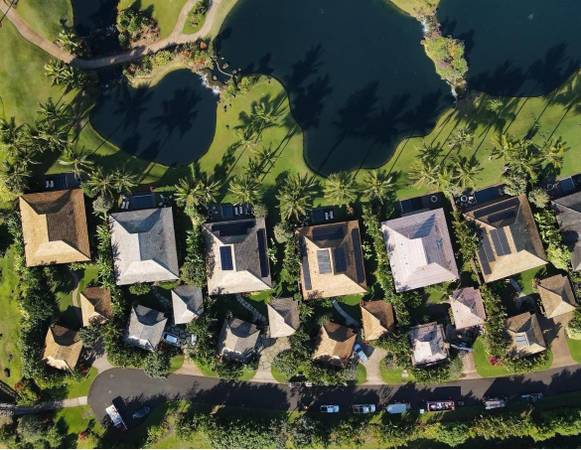
Living in Hawaii means your roof works harder than almost anywhere else in the country. Between intense UV exposure, salt-laden trade winds, heavy tropical rain, and the occasional hurricane-force gust, roofing materials here face conditions that mainland homes rarely encounter. A roof that lasts 30 years in Oregon might break down in half that time on the exposed Windward coast.
This guide breaks down how asphalt, metal, tile, and cedar roofs perform in real Hawaii conditions—so you can choose tropical roof materials that hold up and give you the best value over time.
What to Consider When Choosing the Right Roofing Material in Hawaii
Hawaii’s environment creates a unique combination of stressors that should shape every roofing decision. Here’s what matters most.
Sun, Salt, & Moisture
Roofs on the islands absorb UV radiation year-round with very little seasonal relief. That constant exposure breaks down organic materials and fades finishes faster than in temperate climates.
Near the coast, salt air accelerates corrosion on metals and degrades adhesives in composite products. Add in 60+ inches of annual rainfall on many parts of the islands, and moisture management becomes critical: standing water, mold, and algae growth are ongoing threats.
Wind & Storm Exposure
Hawaii’s building code requires roofing systems rated for high wind zones, and for good reason. Trade winds are constant, and during storm season, gusts can exceed 100 mph. Material weight, fastening method, and profile all affect how well a roof holds up in high winds.
Upfront Cost vs. Long-Term Value
A cheaper roof that needs replacing in 12 years isn’t a bargain. In Hawaii, especially, factoring in maintenance, durability, and energy savings over the full life of the roof gives you a much clearer picture of actual cost.
Comparing the Best Roof Material Options for Hawaii Homes
Here’s how the four most common roofing materials stack up in terms of performance, maintenance, and long-term value in Hawaii’s climate.
Asphalt Shingles
Asphalt roofing is the most common roofing material in the U.S. and the most affordable option upfront.
Best for: Homeowners looking for an affordable, low-maintenance roof with plenty of style options.
Pros: Budget-friendly upfront cost, available in a wide range of colors and textures, and easy to install and repair. Modern asphalt shingles are designed with reflective coatings that help reduce heat absorption, keeping indoor spaces cooler in Hawaii’s climate.
When properly installed with quality underlayment and ventilation, asphalt holds up well against strong winds, heavy rain, and prolonged sun exposure.
Cons: Shorter overall lifespan compared to metal or tile. Coastal or high-exposure locations may require more frequent inspections to stay ahead of algae growth and weather-related wear.
Hawaii outlook: Asphalt shingles are a practical, cost-effective choice, especially when installed with proper underlayment, ventilation, and algae-resistant materials suited to Hawaii’s climate. With quality installation and routine maintenance, homeowners can expect 20–30 years of solid performance, though coastal or high-exposure locations may see more wear over time.
Metal Roofing
Metal has become one of the most popular choices for Hawaii homeowners, and the performance backs it up.
Best for: Homeowners who want durability, energy efficiency, and low maintenance across all Hawaii microclimates.
Pros: Excellent wind resistance (many panels are rated for 140+ mph), reflects solar heat, resists mold and algae, and can last 40–70 years. Standing seam panels shed rain quickly and have no exposed fasteners to corrode.
Cons: Higher upfront cost, and can be noisy in heavy rain without proper underlayment. Lower-grade metals without protective coatings can corrode in coastal salt air.
Hawaii outlook: With the right coating (look for Galvalume or aluminum options near the coast), metal roofing is arguably the strongest all-around performer in the islands.
Tile Roofing (Clay & Concrete)
Tile roofs are a staple across the Pacific and for good reason. They handle sun and moisture exceptionally well.
Best for: Homeowners investing in long-term value who want a classic island look.
Pros: Extremely durable (50–100+ year lifespan), fireproof, resistant to salt, rot, and insects. Concrete tile is more affordable than clay and still performs well in Hawaii conditions.
Cons: Very heavy—your roof structure may need reinforcement. Higher installation cost, and individual tiles can crack under impact or foot traffic.
Hawaii outlook: Tile is an excellent long-term choice, especially for leeward and coastal homes. Just make sure your structure can support the weight, and that the roof installation is handled by someone experienced with local wind requirements.
Cedar Roofing
Cedar shakes and shingles bring a natural warmth and character that’s hard to match with other materials.
Best for: Homeowners who value a timeless, natural look along with strong insulation and weather performance.
Pros: Rich texture and warm tones that enhance curb appeal. Cedar is naturally resistant to moisture, insects, and decay, and it weathers gracefully over time. It’s also an excellent natural insulator, helping regulate indoor temperatures and reduce energy costs. Cedar’s structural integrity holds up well against heavy winds and rain.
Cons: Requires consistent maintenance to maximize lifespan. Higher upfront material cost compared to asphalt.
Hawaii outlook: With quality materials, professional installation, and routine upkeep, cedar is a strong long-term investment that delivers on both aesthetics and performance. The key is working with a contractor who understands how to select and install cedar for Hawaii’s specific conditions.
Energy-Efficient Roofing for Hawaii Homes
With cooling costs making up a significant share of Hawaii energy bills, the roofing material you choose can have a bigger impact than you might expect.
Why Reflectivity Matters
When the sun hits your roof 300+ days a year, the material’s ability to reflect solar radiation has a real impact on your cooling costs. Roofs with high solar reflectance — often called cool roofs — keep attic temperatures lower and reduce the load on your AC.
Roof Color: Heat & Comfort
Darker roofs absorb significantly more heat. In Hawaii’s climate, choosing a lighter-colored or reflective roof surface can lower your roof’s surface temperature by as much as 50–60°F compared to a standard dark shingle. That translates to noticeable energy savings, especially during summer months.
Best Materials for Energy Performance
Metal with a reflective finish leads the pack in energy-efficient roofing materials. Light-colored concrete tile also performs well. Asphalt shingles with cool-roof-rated granules are available, but still absorb more heat overall. Cedar offers natural insulation but lacks reflective properties.
How Long Should a Roof Last in Hawaii?
Manufacturer warranties are based on average conditions, and Hawaii is anything but average. Here’s what to realistically expect from each material under island conditions.
Typical Lifespan by Material
Mainland lifespan estimates don’t always reflect what you’ll see in Hawaii, where UV, salt air, and moisture put more demand on every material. Here’s a general range for each option under island conditions:
Asphalt Shingles: Typically rated for 20–30 years on the mainland. In Hawaii, quality installation matters more than almost anywhere—proper ventilation, algae-resistant shingles, and reflective coatings all help push performance toward the higher end of that range.
As a CertainTeed® SELECT ShingleMaster™, ProBuilt can back that up with SureStart PLUS 5-STAR warranty coverage, including up to 50 years on materials and a 130 mph wind warranty.
Metal Roofing: 40–70 years on the mainland, with 30–50+ years being realistic in Hawaii when properly coated for salt resistance.
Tile (Clay/Concrete): 50–100 years on the mainland, and still an impressive 40–75+ years in Hawaii—one of the longest-lasting options available.
Cedar Shakes: With proper maintenance and quality installation, cedar roofs can last 30+ years. Regular upkeep is the biggest factor—well-maintained cedar holds its structural integrity and continues to perform in Hawaii’s climate.
What Shortens Roof Life in Hawaii
Constant UV, salt exposure, moisture intrusion, improper installation, and lack of regular maintenance all shorten a roof’s effective lifespan. Annual inspections go a long way toward catching small issues before they become big ones.
So, What’s the Best Roofing Material for Hawaii’s Climate?
The best material depends on your home, your location, and your priorities. Metal roofing offers the strongest combination of durability, energy efficiency, and wind resistance. Tile is a top-tier choice for long-term performance, especially in coastal areas. Asphalt delivers real value with a clean, versatile look at a lower upfront cost. And cedar stands apart for homeowners who want natural beauty, strong insulation, and genuine character.
Every option can work well in Hawaii. The difference comes down to matching the right product to your home and the team installing it.
Work With a Hawaii Roofing Contractor Who Understands Local Conditions
Not every roofing material performs the same across Oahu’s microclimates. What works in Kailua may not be the best fit for Kapolei. At ProBuilt Hawaii, we help homeowners match the right material to their home’s specific exposure, budget, and goals. If you’re weighing your options, we’ll walk you through what makes sense for your property.
Contact us today to request an estimate on your new roof!